The City as a Canvas with Ilana Altman
Hello stranger, I'm Mouna Andraos.
Melissa Mongiat:And I'm Melissa Mongiat.
Mouna Andraos:We're the co founders of Daily Tous les jours, an art and design studio that leads an emergent field of practice combining interactive art, storytelling, performance, and urban design to reimagine the way we live together.
Melissa Mongiat:This is episode two of Strangers Need Strange Moments Together, a podcast based on chapters from our book of the same title.
Mouna Andraos:Welcome to chapter City as Canvas.
Melissa Mongiat:Anchored under Toronto's Gardiner Expressway and guiding its complex future, The Bentway is a growing public space and much more. It is a new type of civic organization and not for profit powered by vital partnerships with the city of Toronto, residents, supporters, artists, city builders and dreamers. The Bentway is a creative catalyst rooted in experimentation, leading a creative movement to reimagine the opportunities of urban spaces.
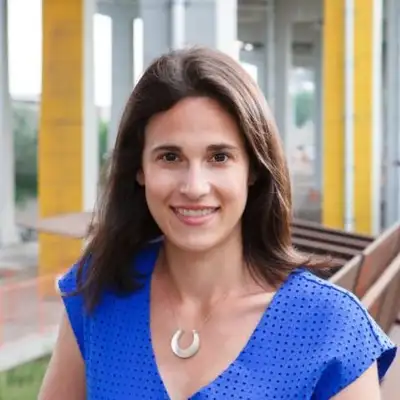
Mouna Andraos:So this is Ilana Altman's official biography. Ilana, you're the CEO of the Bentway, a cultural planner and designer who has a background in art and architecture. You work to unlock new public space opportunities, build strong civic partnerships, and implement innovative and engaging programming, resulting in new inclusive experiences across the city.
Melissa Mongiat:We previously worked with Ilana to bring our artwork titled Walk Walk Dance to the Bentway, and we're excited to talk with her today about this unique space in Toronto's urban landscape.
Mouna Andraos:Hi, Ilana. Thank you for joining us. Hi.
Ilana Altman:It's a pleasure.
Mouna Andraos:So this is Strangers Need Strange Moments Together. And so in this podcast, we've been kind of wanting to reach out to people who have played an instrumental role in the path of Daily Tous les jours over the last fifteen years, either as inspiration or supporter, and you've been all of these things. So we're super excited to have you here. We're here in LA together, and we just attended the Global Cultural District Network Conference. It was really exciting and you were here in parts to present a new report that you published around kind of the topic of loneliness in the city and Toronto being I guess infamously named recently one of the loneliest cities in Canada, which as a start sounds a little bit sad, but I think the Bentway managed to turn this into positive action.
Mouna Andraos:Can you tell us a bit about the report and the work that you did around it?
Ilana Altman:Yeah, well, you will know well that the Bentway's programming is always framed around a particular urban question or issue that's facing spaces like the Bentway, facing public spaces across the globe. And we invite creative collaborators to come in to spaces that are traditionally dominated by planners and policy makers, and to help us to unpack new ways of approaching our development of our cities, new ways of thinking about the value of public space. And so this report that you've made mention of by the Toronto Foundation, Vital Sign Report, which is an annual report that talks about the quality of life in the city, came out just as we were forming our plans for our 2024 season. And we were really struck by the headline that Toronto was named the loneliest city in Canada. I always reference a few of the stats because they're just so staggering.
Ilana Altman:Forty three percent of people reported that they never see their neighbours. Thirty seven percent of Torontonians report that they feel lonely three times a week. And in addition to that, volunteership was significantly down, donations to nonprofits were significantly down. It was a really bad picture of the city and not entirely surprising. Over the last several years, you'd really felt it in the city, something had changed, the dynamics had changed and it felt harder than it had ever been before.
Ilana Altman:But we also recognize that public space were the spaces where the community was already coming together and finding ways to reconnect with one another, finding ways to meet neighbors. And so we wanted to understand that in more detail, we wanted to understand how public spaces could become an antidote to loneliness. So, we reached out to creative partners who collectively came up with a series of brilliant design and artistic experiments. So many of them took on seating as a form because of the fact that seating in public space is that invitation for people to stop and to spend time with those that they don't know. They explored the beautiful act of holding hands with somebody in public space and how that intimacy can help to reframe a city and its experience, and just create feelings of warmth and joy as you're walking through a place that can feel very alienating.
Ilana Altman:So it was a whole host of different creative experiments. And then alongside that, we were lucky enough to work with the Dalla Lana School of Public Health at the University of Toronto, their researchers, as well as Gehl, who's an urban design consultancy, really focused on how to make places more people centric. And we ran a series of surveys and data collection and observational studies alongside the season. And collectively that produced the findings that are captured in the report that you made mention of. And a whole host of great findings.
Ilana Altman:The first and foremost is that public space really is a public health tool. Public programming and public space really are public health tools and need to be regarded as such. So we need to start embedding them in our discussions about public health alongside immunization campaigns and awareness campaigns. We need to really embrace social prescribing alongside medication and physiotherapy, because these spaces can play a huge role in helping to address this phenomenon.
Mouna Andraos:Anything special that came out of the report that you didn't expect?
Ilana Altman:Well, I think the most surprising thing was how easy the recommendations were to implement. They weren't calling for wholesale change, they weren't calling for massive investment. They were drawing attention to features that we may have forgotten how significant they are in public spaces. Features like seating as I mentioned which are really centers for sociability in a pubic space.
Mouna Andraos:But it also became controversial, so many neighborhoods are scared of putting seats now because they don't want people unfortunately sleeping on them or skateboarders using them etcetera but mostly kind of not knowing how to address the homelessness situation where being told over and over again, we're not sure we want seats in this location. We're losing a lot, right?
Ilana Altman:Yeah, and being able to kind of resist the impulse for defensive architectures is so important because of the fact that there's real mental health consequences from removing those features from our public space. Access to nature was incredibly important. People called it out as a means of helping them to feel safer and a stronger sense of belonging from their community. But ultimately people want to be around other people. I think that the one thing that surprised me, and this is partially generational, is that when we were speaking to younger people, they were describing that the way that they socialize is different than at least how I remember doing so at that age, which was much more spontaneous.
Ilana Altman:I think that we're so overwhelmed by information and opportunity in this day and age, that increasingly people need direct invitations to get involved. And those invitations can be communication strategies, they can be programming efforts, but they can also be real cues in a public space, be it lighting, be it seating, be it wayfinding, that signals to people that this is a space for them, they belong, they're wanted there. And that can make all the difference in getting people to engage with their city.
Mouna Andraos:That's crazy, right? That we need an authorization or an invitation in a way, and especially that the younger people feel they don't belong, or they're not welcome. Do you think it's because we or they are overwhelmed with too many invitations or is there really a sense that the city is not necessarily a place for them to just be?
Ilana Altman:I think it's a combination of factors. I think that unfortunately we've been building more alienating places of late. In Toronto, we're living through a huge housing crisis. We're not alone.
Ilana Altman:A lot of cities across the globe are facing it. And in our push to deliver on the need for housing, sometimes we're forgetting what makes a complete community. It's not just the number of units or the number of beds that you can provide. It's about making sure that those spaces are well serviced and connected and have access to public spaces, have access to public amenities. That's being forgotten a little bit in this drive to deliver housing.
Ilana Altman:And I think that you're seeing it in the way that people engage with their neighborhoods. I do think that our increased reliance on technology has maybe suggested that connecting online is the same as connecting in person. And in COVID, I think we all had to accept that it was for our sanity, but it's not. Being together in public space, being around other people is incredibly important. And it was the number one thing that people said increased their sense of well-being, their strength and their mental health was just being around other people.
Ilana Altman:Didn't even have to strike up a conversation, just sharing space with people brought incredible satisfaction to the visitors that were coming to the Bentway.
Mouna Andraos:We're a little biased, obviously kind of doing and loving interactive public art. And so I was excited to see that one of the items that made it to the final checklist recommendations for public space following the study was including interactive public art. So making sure people can engage with the art that's around and participate. How did that come about as a conclusion? And what role do you think participatory installation, but also tech could play? And is tech important to interaction with public space and public realm and public art? Or is it just about any form of interaction?
Ilana Altman:Yeah, well, I mentioned that we were working with Gehl who was doing a public life study, an observational study to really understand patterns of movement, where people were stopping, how people were spending time at the Bentway. And they found that the areas of the site that included public art saw about a 20% increase in the amount of time that people were spending in the space. They became stickier spaces.
Mouna Andraos:Any kind of public art?
Ilana Altman:Interactive public art in particular, but any type of public art made a big difference. We had this beautiful piece on view by Heather Nichol called Wind Ensemble. And it was a spatialized chorus with a series of cones that you could speak into and trigger a vocal response. So you were lending your voice to this chorus and you saw yourself reflected in a broader community, which we thought was a beautiful way of talking about the importance of connection. And it was an incredibly popular piece.
Ilana Altman:We found that people spend time with it on their own. They played with it amongst strangers. They would bring their family members back so they could participate all together. And it was really beautiful to see how people each made it their own and came back and revisited it and tried it in different ways. So, I think that interactive art is one of those critical invitations that we were just talking about.
Ilana Altman:It's a real cue that this is a space for you, that your voice matters there, that you can exert a certain level of control over the space to make it more comfortable, to make it more approachable. So we've had great success, including the work that we presented by Daily tous les jours, Walk Walk Dance, was one of the most popular and well loved pieces that the Bentway has ever presented. And your question about technology, I mean, I think that we really try to avoid mediated experience. I think that technology can be dangerous in a public space when it removes you from the space and it's, you're in the space, but you're being filtered by a screen or by a technological device. So I think that it really depends how technology is embedded when it's embedded in a space and by embedding it, you're giving people more control, more agency.
Ilana Altman:I think it's incredibly wonderful compliment to the public space, but it has to be done well.
Mouna Andraos:The publication also uses the word intentional participation, which I thought was interesting. Can you tell us a little bit about how it translates, what it means?
Ilana Altman:Well, the thing that makes me most excited about working in a space like the Bentway is that it's not a white box, it's not a black box. It is by nature a space that you have to give up control. And that's what makes it the most interesting space to work and the most challenging space to work. We have long stopped thinking about the people who visit the space as audience members. We're not inviting them there to engage in something passively.
Ilana Altman:It's their space, it's their city. And so they're always there as active participants. And sometimes that participation can be very direct. Other times it's about the ways that they choose to engage in a space and a piece. And we learn each and every time, we put public art projects out in the world and the way that people react to them, the way that they engage with them always surprises us.
Ilana Altman:So I think that in general planning for participation, but also just changing our language and the way that we are thinking about the people who are using the space. If we frame them as participants from the start, it just sets up a different dynamic, a much more positive dynamic, which I think leads to greater agency in our cities on the whole.
Melissa Mongiat:If we think of audience, often it feels the discourse of public space is often like minded people who are talking about it. And in current global polarization that we see everywhere, is it something that's on your mind and how do you go about it?
Ilana Altman:Yeah, I was relaying this story at the conference that you were making mention of in LA. One of the projects that we presented as part of our Softer City season was with a social scientist by the name of Anthony Morgan. And he does these incredible meetups around Toronto where he plays this game where he puts a piece of tape on the floor and then people randomly choose sides. And he poses a series of questions to those people. And if you agree or disagree, you choose your side.
Ilana Altman:And then the individuals on the other side can make an argument trying to get you to the crossover. And the rule is if you hear something that surprises you or something that makes you laugh, you have to change sides. And the questions are, they range from tough political questions to silly questions like, do you like bananas?
Mouna Andraos:It doesn't matter which side you're in, you just change.
Ilana Altman:Doesn't matter which side you start on. You change question over question. And the interesting thing is that people change sides all the time. You are not the product of one opinion or one decision or one affiliation. It was just such a potent way of demonstrating that, that we are the sum of a lot of different opinions and a lot of different affiliations.
Ilana Altman:And it was important because I think that we have stopped seeing each other that way. And increasingly we're seeking out spaces and opportunities that just reinforce a particular point of view. I think in Canada, hasn't gone as far as polarization yet, but we're not that far away from what's happening in The States and what's happening in The States right now is frightening. So our cities, you don't choose cities because they are friction free.
Ilana Altman:And because you're going to be surrounded with people who only look like you and think like you and act like you, you choose cities because of the fact that they are diverse places and you will be confronted with different opportunities and opinions that might challenge the way that you think, but hopefully it leads to an enriched experience on the whole. We have to remember that because that's what makes our cities great. And I think our public spaces play a really important role in facilitating those points of friction and those points of productive connections. So we try to celebrate that as much as possible.
Mouna Andraos:So over the year, the Bentway has kind of pioneered incredible work and different projects, installations, often if not always temporary. Have you seen any impact on the city at the policy level or been able to make a dent that is at a larger scale or will impact people beyond kind of the Bentway and its expanding territory?
Ilana Altman:Yeah, well, I'll answer that question in two ways. The first about the space itself. Toronto is densifying at such a fast rate that we have had the luxury of having a lot of property to develop into public space. And as we grow as a city, we no longer have the luxury to look for these tabula rasa sites that are blank slates that we can change over. We have to invest in the places that are going to be the most impactful for people because they exist where people are at.
Ilana Altman:And the Gardiner makes up about 65 acres. The spaces under the Gardiner makes up about 65 acres of unused land in the city of Toronto right now. That is a huge amount of space.
Mouna Andraos:And inhospitable too in most
Ilana Altman:Yeah, exactly. Imagine taking a 65 acre plot in the middle of your city and paving it over with concrete and imagine the impact of flooding and the impact on the urban form that that would have. So we don't have the luxury of saying that the status quo of this highway is okay anymore. It needs to change. I think what the Bentway has proven is that it can change in a productive way. It can serve the community in many different ways.
Ilana Altman:And we were lucky enough that the success of the Bentway led us to work with the city to develop a larger plan for the full seven kilometer extent of the elevated highway, the Under Gardiner Public Realm Plan, which was approved by council last year. And we are slowly but surely taking the next steps to implement the recommendations in that plan. So I hope that in the next ten years, we see a real transformation of the Gardiner end to end. But even beyond that, I think that the project like the Bentway has forced not just Toronto, but cities across Canada, cities globally to think differently about infrastructure, that we're not thinking in a monofunctional way anymore. We're not building pieces of infrastructure to serve only one purpose.
Ilana Altman:You know a highway is solely to move cars from A to B. We have to be thinking about our infrastructure in a hybrid way so that we're taking best advantage of the property that we have to develop and making sure it's serving the public in a lot of different ways.
Mouna Andraos:It's gonna be so exciting when all of it is active and transformed.
Melissa Mongiat:I can't help but think of Paul Kalbfleisch, who's a client and collaborator who we were in a conversation with him during the pandemic and came up this expression, the infrastructure for the human spirit,
Melissa Mongiat:where we were talking about what we do. And it feels very much like the Bentway is taking this large infrastructure and giving giving it back to the human spirit which makes me think of one of my favorite projects that was hosted at the Bentway and it involved a lot of dominoes. It actually moved us both Mouna and I took our family.
Mouna Andraos:Emotionally moved us and physically. Physically moved us
Melissa Mongiat:all the way to Toronto for a weekend to participate in this large scale domino experience.
Ilana Altman:Yeah, well, will never forget when I got Mouna's email that I think said six hours for six minutes question mark. Was the six hour drive worth it for a six minute experience? Hopefully it proved to be more than a six minute experience.
Mouna Andraos:I mean, once we signed up to be volunteers, then it became a six hour experience also. And so much more than just being the witness, it was amazing. And the kids just loved participating in building up something huge and being part of this crowd and they were just so excited. They worked hard carrying these heavy dominoes to the point where we actually had to drag a domino back in our car all the way to Montreal too in case it breaks. Feel like there's no way we're leaving these things behind, we work too hard.
Mouna Andraos:But describe a little bit this project for us.
Ilana Altman:Yeah, Dominos was such a special project. It was a project that was initially conceived by Station House Opera, which is an incredible company out of The UK for the London Olympics. There was a call that was put out looking for projects that could connect the city. And this was quite literally a way of physically connecting the city through a very familiar game, a life size domino course that would run, would break every rule, run across streets, run through businesses, run through people's homes to prove out connections that we had not been able to see otherwise. And it was such a success in London in I guess 2012 that has traveled the world since, but it has never made it to Canada before.
Ilana Altman:And it hasn't been presented that many times in North America because of the fact that I think North American cities really proved a challenge in that they are scaled in a different way than European cities. Crossing a road in the city of Toronto is a logistical
Melissa Mongiat:Adventure, adventure,
Ilana Altman:But we were determined to bring it to Toronto because we knew that it could be such a powerful way of proving out the connections that the Bentway was advocating for physically, but also socially. Because as you said, it was an effort put together by the community at large, including 40 different participating organizations and businesses, 300 volunteers who came together to build the project. And after months and months of planning, we all came together on a beautiful September day beginning at noon and set up this incredible domino course that ran for two and a half kilometers across the city. It was insane. It was insane.
Ilana Altman:And it felt impossible even as we were setting it up. But the incredible thing is that it didn't actually matter if it didn't make it through the city perfectly. The fails were just as incredible as the successes because the community was so invested in seeing it make its way from end to end. And once the first domino dropped, it did run for about half an hour as it curved up and down stairwells and across streets and through pickleball courts, where I will say that the players were so into their game that they refused to stop because the dominoes were making their way through. And ultimately the final block dropped into Lake Ontario.
Mouna Andraos:It was to the cheer of the crowd who went mad.
Melissa Mongiat:Passing through Lakeshore Boulevard.
Ilana Altman:Oh, Lakeshore Boulevard. We were given a maximum of ten minutes to close the road, meaning that we couldn't set up the dominoes in advance. So we heard the call coming, the dominoes were coming and the police cars pulled into position, it held back the cars, the volunteers ran with the dominoes. The first one hit as it was crossing the road, they went through, they cleared the site and all took place within ten minutes. It was quite remarkable.
Melissa Mongiat:It's one of my strongest memories because we were all watching them a little bit and then running together to the other space and we were like hundreds of people. And when it came to cross Lakeshore Boulevard, the drivers just like stopping and seeing the herd of people crossing the street for Dominos. It was beautifully absurd.
Ilana Altman:I really appreciate the fact that initially all the drivers honked and were angry and then they got out their cars and then they pulled out their phones and then they clapped. But even as we were putting it together, I knew that this would be one of those collective memories of the city that people would remember long after the event had taken place. Ten years from now remember where you were when you saw the dominoes making a way through the city. And those moments are so important, they're so special. So to your question earlier about temporary and its legacy, I think that those conditions, the conditions we create to facilitate those shared experiences that lead to those collective memories, that's the significance of the legacy, as well as the volunteers.
Ilana Altman:I have really come to realize that too often we as public programmers think about volunteership as a means to an end. It's like we're bringing these people together so that we can deliver a project and the project is the output. But the volunteers and their experience and the connections that they make, that's the output, that's the significant output. Neighbors met neighbors for the first time through that experience that has led to social groups that have extended long after the day of putting the dominoes together. So that's an incredible legacy that we're really proud to have helped to support.
Melissa Mongiat:And the larger story was really about collaboration, like how we can achieve more together than alone. And I think that's for our kids, it was a wonderful, it was the best school for that. And just for them to see adults being so into it and you really had to be precise and it was super well organized but you had to place them in very specific spacing and kids would be almost like policing.
Mouna Andraos:They had to be protective.
Mouna Andraos:More than adults but everyone was into it. And for them to see the adults so invested in something so playful, which is maybe a good transition to a study we did together in 2021 about play. It was post COVID, I think it was the first programming after the pandemic.
Ilana Altman:So 2021.
Melissa Mongiat:Playing in Public was the edition. I don't know if you wanna describe it a little bit for us.
Ilana Altman:Yeah, well, this was a project that we started planning for in 2019.
Ilana Altman:And we very quickly realized that the Bentway, it's a non traditional public space. So it was not gonna support play the way that a lot of parks usually do. It wasn't going to support traditional playgrounds or sports fields, but that actually presented us with a really interesting opportunity to think about how we could reinvent the rules of play and come up with something different and really relevant to the city in this particular geography. We were also really interested in the history of play and how it had worked as a tool to inform decisions about public space, different way of consulting with the city, the fluxus and the situationalists had a long history of using play as a means to critique things that were happening in the city, critiquing capitalist practices and overly choreographed ways of controlling movement in the city. So we were developing this season and we're developing this incredible season of highly interactive, significant touch points and for the public then COVID hit.
Ilana Altman:And so everything went on pause, including our development of the season.
Ilana Altman:But we were committed to seeing it through. And I think in the end we had to reframe what the project was about because while all of those questions that we had started with were still very relevant, as we brought the project to life in 2021, it was the first time that Toronto was coming out of a really significant lockdown. Toronto's lockdown was amongst the longest anywhere in the world. It was really strict and very prolonged. And so play actually became a way that people were re engaging with their city and with each other for the first time. And it was about creating the conditions that made people feel safe in doing so, made people feel connected to their city once again.
Ilana Altman:And so in addition to the questions that we started with, we were also asking could play be a tool for urban recovery coming out of COVID. And it was an incredible season. The other thing that the pandemic forced us to do was to think beyond the drip line of the gardener, because as much as we wanted people to come down to the Bentway, it was an outdoor space, we felt it was more important to reach into the neighborhood, to go to where people were rather than asking everybody to come to us. So we ended up developing the season as a neighborhood exhibition. And it involved about 16 different projects that probably tracked through at least six different sites, including the Bentway, and an incredible connective play path in between so that you could really experience this play ecosystem within the city.
Ilana Altman:And that was a product of COVID. I don't think we would've done that had it not been for COVID, but it has since become a way of working that we continue to do because we found it to be so successful.
Melissa Mongiat:It was such a timely subject matter that it felt important to measure and understand the impact of play.
Ilana Altman:Yeah. Well, we were lucky enough to be working with you on a project for our play season. And your project initially was one of those very tactile projects,
Mouna Andraos:the first edition were these stretch bars you had to touch to interact with.
Ilana Altman:And the way that you adapted that thinking about giving people control over their environments and the ability to create music together was I think one of the most successful projects that we presented. It was just pure joy in this project Walk Walk Dance that transformed our boardwalk into a series of music making devices, built into a typical city planter, but invited people to play together at six feet apart. It turned the six foot social distance rule into creative territory rather than just a means of distancing from one another. But based on the success of that collaboration and your past work, we were really interested in how we could capture the learnings from the season and carry them forward. And present recommendations that would be applicable beyond the Bentway, would be applicable in public spaces anywhere.
Ilana Altman:So alongside the season, I think we did a whole bunch of audience surveys. We did interviews with artists. We did desktop research into the value of play and its importance in that moment. And it became a study titled Play Provocations, which captured so many relevant learnings. Learnings that we are looking back at very closely now as we think about our expansion. The Bentway is working on an expansion site.
Ilana Altman:And we're really thinking about how we can take the learnings from the play season and the play provocation document and embed it into our new spaces. And it's about building a play ecosystem that gives people choices. It's about thinking about the connections between play infrastructure and the ways that we transform our city into a playscape, even if it hasn't been designed for that in the first place. A of really great learnings that came out of that document.
Mouna Andraos:I think honesty, yeah, go ahead, Mel.
Melissa Mongiat:I remember one of the first key learning was with the surveys and a lot of people would answer to the question, did you play today? They would say no and they would be blowing bubbles from interview station. And that reluctance to associate play to adult life was very strong and at the same time how important it was. By the end of the survey how things change in their perspectives and even ourselves.
Mouna Andraos:Yeah, was gonna say even for Daily tous les jours I think that moment really was pivotal in us embracing the word play after many years of not wanting to use it to describe the work that we were doing because it was we felt too reductive and was a way for people to put Daily tous les jours' work in a box. For kids. Only with a little fence around. And so following that summer and thinking through the publication we really changed and since now since then we've been embracing play also looking back at it and making sure we just go full on.
Melissa Mongiat:A lot of things were validating also the way we work I think we've always since the beginning saw the importance of offering different levels of engagement for the super heavy users who will find all the Easter eggs in what you do and people who would just like to watch. And working with CAMH on mental health that we also interviewed for the study they were saying just how watching other people smile makes you release a lot of happy hormones in your brain, how it's beneficial and how it creates you really want this ecosystem of offering for play in your city.
Ilana Altman:Yeah, there's so many learnings I think that came out of that moment in the pandemic that we instantly forgot. And I'm glad that this is not one of them because
Mouna Andraos:A lot of things we had to forget.
Melissa Mongiat:Yes, absolutely. But there were some important things that we probably should have held onto, but I'm glad to hear that it's carried forward for you because it absolutely has for us as well.
Mouna Andraos:We promised we'd only keep you away from the excitement of LA for an hour. There's one question that comes to mind is do you ever get tired? And I know it's funny, right? But like it's been how many years now almost going to ten years for the Bentway?
Ilana Altman:It will be ten years in 2028.
Mouna Andraos:Okay. Yeah. So a few years away, but yes, it's been seven years of constant investigation, experimentation, pushing the boundaries, breaking the rules, trying new things, which have been extraordinary in this laboratory. But is there a moment where you feel okay the work is done and we can leave it as it is? That is the formula for what this public realm should be and we can move on to other things or do you feel it needs to be kind of constantly reinvented?
Ilana Altman:I mean, to answer your question if I ever get tired, sometimes, but the work is so interesting and fulfilling and challenging that it does fuel me in an incredible way. I'm very lucky in that regard. I kind of feel as though I had a vision of a city and what I hoped it would be. And the Bentway is that platform where I can try to make it reality. And not very many people are given that So that's very, very special.
Ilana Altman:My background's as an architect. So I spent a lot of time designing public spaces. And the idea that you could ever design something once and it would be done now feels so funny to me that I could ever conceive of a place that way. But not very many people have the opportunity to be on the operational side. And when you're on the operational side, you realize public spaces are made over and over again, constantly by the people who use them.
Ilana Altman:And so the best places are the places that can continue to adapt and be responsive. And I also, when I was an architect, I was skeptical of public programming. I felt like, is public programming just a means of compensating for bad design? Which was very egotistical at the time, I realized. But now not only obviously am I a big believer because it's what I do, but I see in action the fact that it allows us to make sure that the space is responsive, that it keeps changing alongside the community, that the community feels themselves reflected in the space, that they feel surprised by this space, that they feel challenged by this space.
Ilana Altman:And every time we invite an artist or a designer to come to the Bentway, they wanna do something entirely different. And if that ever stops, if we start inviting people and they wanna repeat the same thing that we've done over and over again, then maybe I'll say, okay, our job is done. But as long as I continue to be surprised by the creatives and the collaborators we work with, I can't imagine ever being
Mouna Andraos:And the playground's growing.
Melissa Mongiat:It's a true experimental practice. That's where you only get tired if you get tired of the experiment itself.
Mouna Andraos:And for smaller places and sites and locations and I'm sure you get that question all the time. Smaller cities or public spaces that don't necessarily have the resources to do the kind of programming that the Bentway does? What would you say is the essence, like the elements that one should fight to preserve or bring on in a site?
Ilana Altman:I think ultimately if you're fighting to make a place a truly public space, meaning for people, then you'll create the conditions where great things can happen there. That doesn't necessarily mean having to invest a ton of money or getting the most beautiful landscaping done. It means taking away the barriers, ensuring that it's a space that addresses the human scale, creating the conditions for people to gather, that can be done relatively affordably and cheaply, and even in a temporary way to see whether it's successful. But that's what makes a space thrive is that people wanna be there. And so thinking about ways that we can invite people in, giving them every reason to spend time with us in a place.
Ilana Altman:I think that you can do that anywhere as long as you have the right perspective and attitude.
Mouna Andraos:Going back to the invitation.
Ilana Altman:Yeah, absolutely.
Mouna Andraos:Ilana, thank you so much. It was great. Thanks for taking the time, joining us on this adventure. This was Strangers Need Strange Moments Together.
Melissa Mongiat:Thanks for listening. Don't forget to subscribe.
Mouna Andraos:And check the episode description for links to follow us online and to order your own copy of the book.
Melissa Mongiat:Another episode is coming soon.
Mouna Andraos:We can't wait to announce our next guest.
Melissa Mongiat:Special thanks to Michael Baker and Claire Lecker.